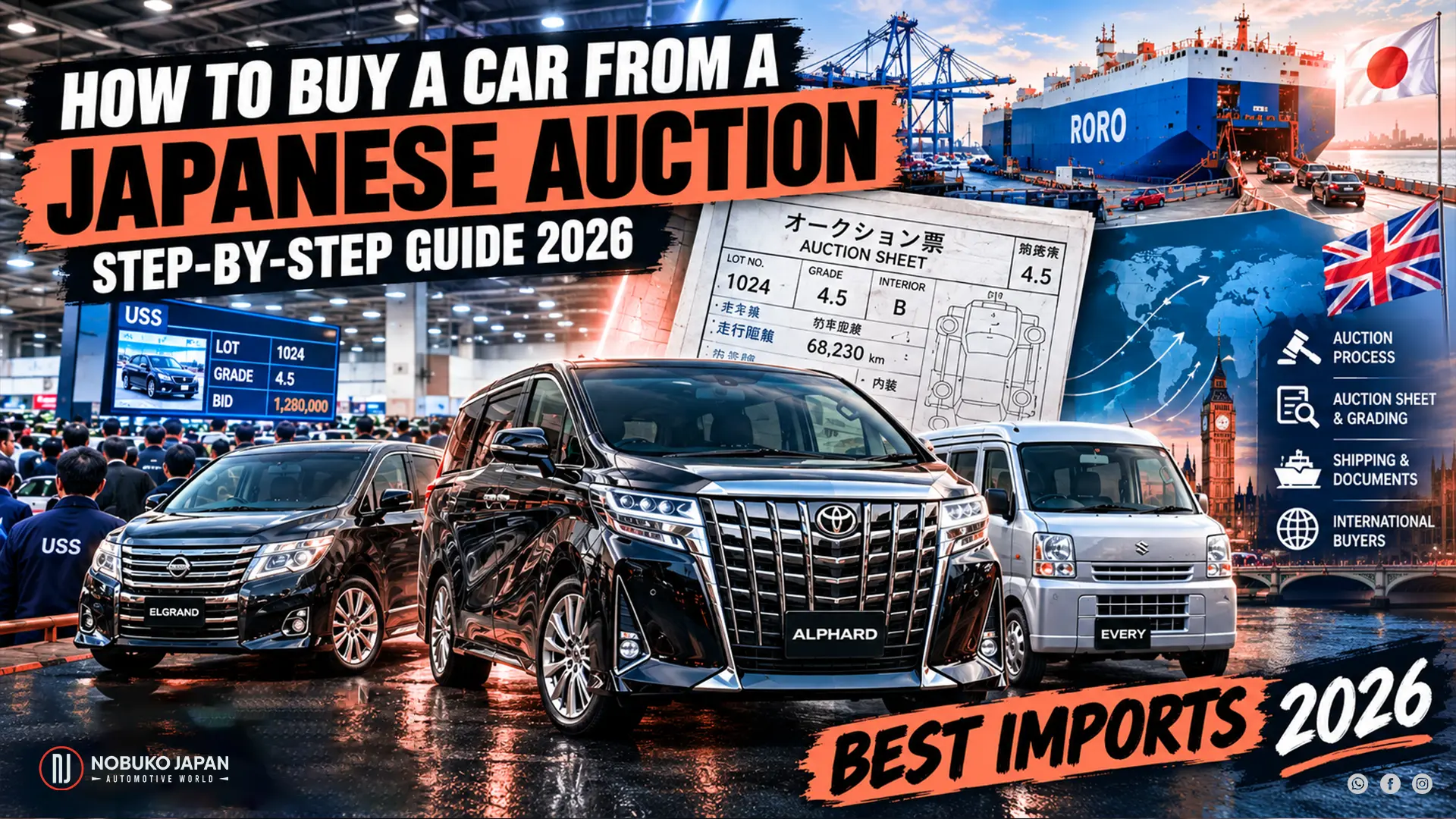
This guide is based on 14 years of bidding at Japanese vehicle auctions and preparing vehicles for export to buyers worldwide. Auction grading conventions, documentation requirements and export procedures reflect current practice as of August 2026. Grading scales vary slightly between auction groups, and destination import rules differ by country and change by notification confirm your own requirements before bidding.
Japan runs well over a hundred auction venues nationally, operated by several competing groups. The largest by volume is the USS network, alongside TAA, JU, Arai, CAA, JAA and others. Between them, tens of thousands of vehicles are traded every week.
Where the cars come from. Japanese owners typically trade vehicles in rather than sell privately, often at the point where the next shaken roadworthiness inspection would become expensive. Dealers consign that stock to auction. This is why Japanese auction cars are so consistently well maintained... the inspection regime forces it, and the domestic market discards vehicles far earlier than most countries do.
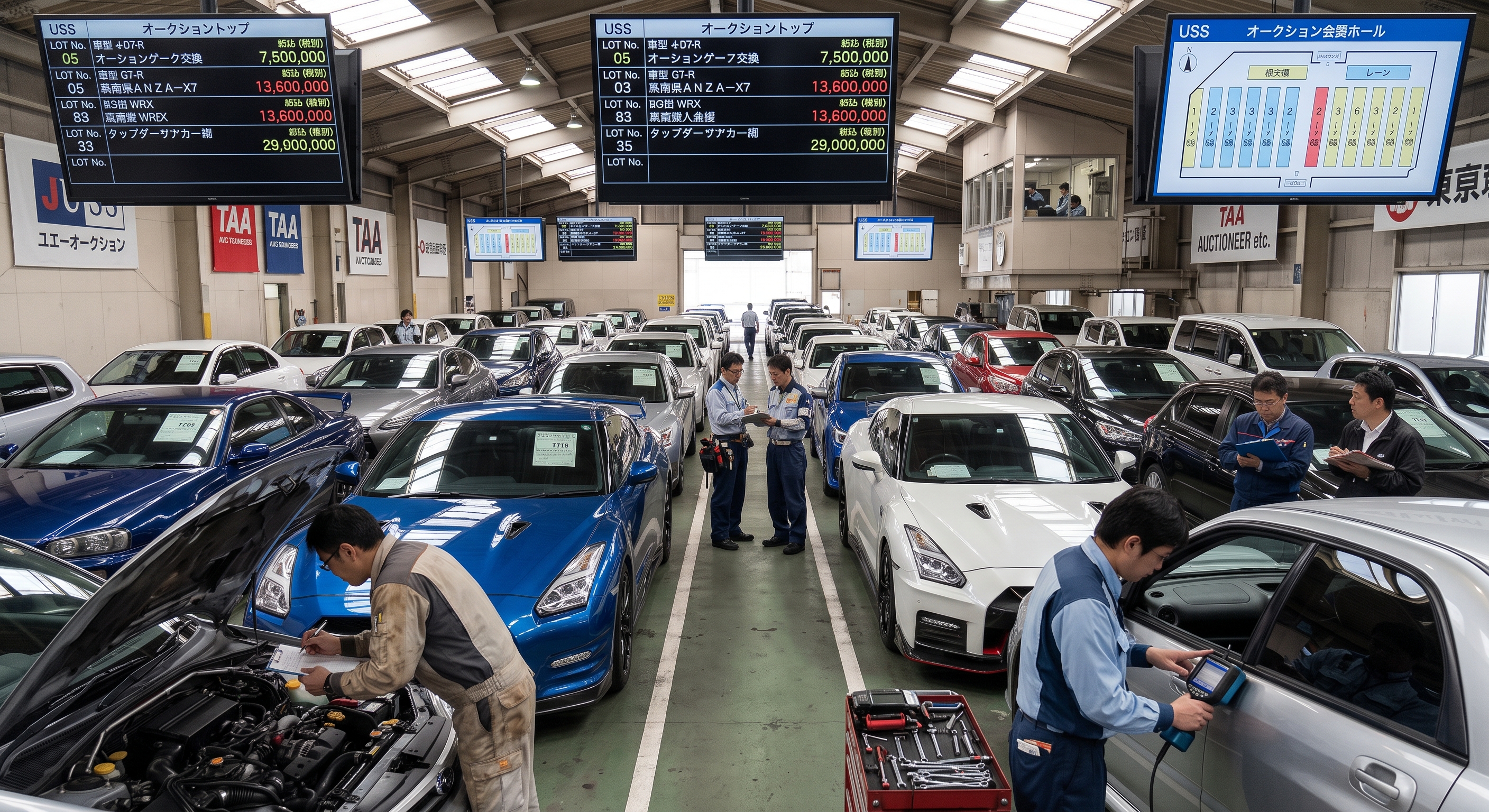
How the auction runs. Each venue operates on fixed weekdays. Vehicles move through numbered lanes with a display showing the lot number, grade and current bid. Bidding is electronic and extremely fast... often only seconds per car. There is no room for deliberation once a lot is live, which is why your maximum price must be decided beforehand.
What gets published in advance. Stock lists appear a few days before each sale, with photographs and the auction sheet for each lot. That window is when the real work happens.
This surprises people, so it is worth being clear about.
Auction membership is restricted to registered Japanese businesses. Requirements typically include a Japanese corporate entity, a used car dealer licence, a substantial refundable deposit, and in many cases references or a guarantor. Venues are not open to the public, and overseas individuals cannot join.
So everyone importing from Japan works through an intermediary. The only question is what kind.
Both arrangements exist and both can work. But the second means slower answers, thinner information, and a margin you may not see. Ask directly whether your exporter holds auction membership themselves. A straight answer is a good sign in itself.
Every vehicle at auction carries an inspection sheet completed by an independent auction inspector. Learning to read it is the single most valuable skill in this process.
A numeric scale describing the car's condition. Broadly:
| Grade | What it means |
| 5 and above | Near-new condition, very low mileage |
| 4.5 | Excellent, minimal cosmetic wear |
| 4 | Good, minor scratches or dents typical of age |
| 3.5 | Visible wear, still sound. Often good value |
| 3 | Noticeable cosmetic or mechanical issues |
| 2 and below | Significant issues, or heavily modified |
| R / RA | Accident repair history |
On R-grade cars: repair history is not automatically disqualifying. A professionally repaired minor front-end knock is very different from structural damage. But it demands a closer reading of the sheet, and it affects resale in most markets.
Scored separately on a letter scale, typically from A downward. This covers seat wear, stains, odour, smoke damage and dashboard condition. Photographs consistently flatter interiors. The letter grade does not.
A vehicle diagram marked with standardised codes. Scratches, dents, panel waves indicating past repair, corrosion, and panels that have been replaced each carry a distinct symbol, usually with a number indicating severity. A car showing several replacement marks has a history worth understanding.
Mileage is recorded, and critically the sheet flags readings that cannot be verified. Treat that flag as material. The inspector's handwritten notes are in Japanese and require translation... this is often where the most useful detail sits.
Insist on a full translation before bidding, not a summary.
Step 1... Confirm your country's import rules. Age limits, steering configuration, emission standards and mandatory pre-shipment inspection all vary by destination. Do this before anything else, because it determines what you can legally buy.
Step 2... Choose your exporter. Check auction membership, export licence, trade association membership and whether they translate sheets in full. Get their fee structure in writing.
Step 3... Register and place a deposit. Most exporters require a refundable deposit before bidding on your behalf. Confirm the refund terms in writing before paying.
Step 4... Define your specification. Model, year range, maximum mileage, minimum grade, acceptable interior grade, and whether repair history is acceptable. The tighter your brief, the better the sourcing.
Step 5... Review candidates and set your maximum. You receive translated sheets and photographs before the sale. You set the ceiling. Your exporter bids to it and no further.
Step 6... Bid and receive the result. Results come the same day. Expect to lose some auctions... that is normal, not a failure of your agent.
Step 7... Pay and deregister. On winning, the balance falls due. The vehicle is deregistered from the Japanese system and an export certificate is issued.
Step 8... Inspect and ship. Pre-shipment inspection where your country requires it, then vessel booking and loading.
Step 9... Clear at your end. Documents should reach you before the vessel does.
The hammer price is roughly half the picture.
| Cost | What it covers |
| Hammer price | Your winning bid |
| Auction fee | Charged by the venue |
| Exporter or bidding fee | Sourcing, bidding, coordination |
| Recycling fee | Japanese statutory charge |
| Deregistration | Cancelling registration, issuing export certificate |
| Inland transport | Auction venue to port |
| Pre-shipment inspection | Where required by your country |
| Ocean freight | RoRo or container |
| Marine insurance | Optional, strongly advised |
| Destination duties and taxes | Frequently the largest single line |
| Port and clearing charges | At your end |
Two terms you must understand:
FOB means the price covers the car delivered to the Japanese port, loaded. Freight is yours to arrange or pay separately.
CIF means cost, insurance and freight to your destination port are included.
Comparing an FOB quote against a CIF quote makes the FOB look dramatically cheaper. It is not. Always confirm which basis you are being quoted on... this is the most common source of unpleasant surprises in the whole process.
RoRo (Roll-on/Roll-off) means the car is driven onto a vessel designed to carry vehicles. It is usually the cheaper option and is straightforward for a single running car.
The trade-offs: the vehicle is handled by port staff at both ends, it sits exposed on the deck, and you cannot pack anything inside it. Some ports do not receive RoRo services at all.
Container shipping places the car inside a sealed container. It costs more for a single vehicle but offers better protection, allows spare parts to be shipped alongside, and makes economic sense when sharing a 40-foot container across two or more cars.
Which to choose. For a modestly priced, running vehicle to a port with regular RoRo service, RoRo is usually right. For a high-value car, a non-running vehicle, or a destination without RoRo coverage, container is the better answer.
Your exporter should quote both.
These are what your customs authority will want. Missing paperwork is the most common cause of vehicles sitting at port accruing storage charges.
Your own customs authority may require additional documentation. Confirm the list early rather than assuming, and check the documents when they arrive rather than when the vessel docks.
The exporter matters more than the auction. Ask these before committing money:
The tell is not the answers themselves so much as whether they arrive quickly and in writing. An exporter who answers precisely at the enquiry stage generally handles documentation the same way. One who is vague now will be vague when your car is sitting at port.
A realistic timeline, assuming you win reasonably quickly:
| Stage | Typical duration |
| Registration and deposit | A few days |
| Finding and winning a car | One to four weeks |
| Payment and deregistration | One to two weeks |
| Inspection and vessel booking | One to three weeks |
| Ocean transit | Two weeks to two months, by destination |
| Customs clearance | Days to weeks |
Expect two to four months door to door in most cases. Regional Asian destinations are faster; Africa, Europe and the Americas take longer.
The variable most people underestimate is the search. If your specification is tight, winning the right car can take several auction cycles. That patience usually pays for itself.
The Nobuko Japan Vehicle Sourcing Team has 14 years of experience working with Japanese used vehicles, auction information, vehicle sourcing and international buyers.
This guide covers how the Japanese auction system works, how to read an auction sheet and its grading scales, the full step-by-step buying process, what it costs, shipping options, the documents you will receive, and how to assess an exporter before committing.
Nobuko Japan bids across Japanese auction venues on your behalf, translates the complete auction sheet, carries out a 200-point inspection, and handles deregistration, export documentation and shipping to your port.
Start Your Auction Search
For Latest updates

The Japanese car auction market is continuously evolving with time. They offer buyers worldwide acce...

Japanese brands are the smart choice when you need a reliable car. In fact, companies like Toyota an...

Cost Breakdown of Importing a VehicleThinking about importing a car? Then you're at the right place....
.webp)
Why the Toyota Alphard is Gaining Popularity in the UKThe Toyota Alphard car has literally taken the...
Check out other articles related to Market trend.