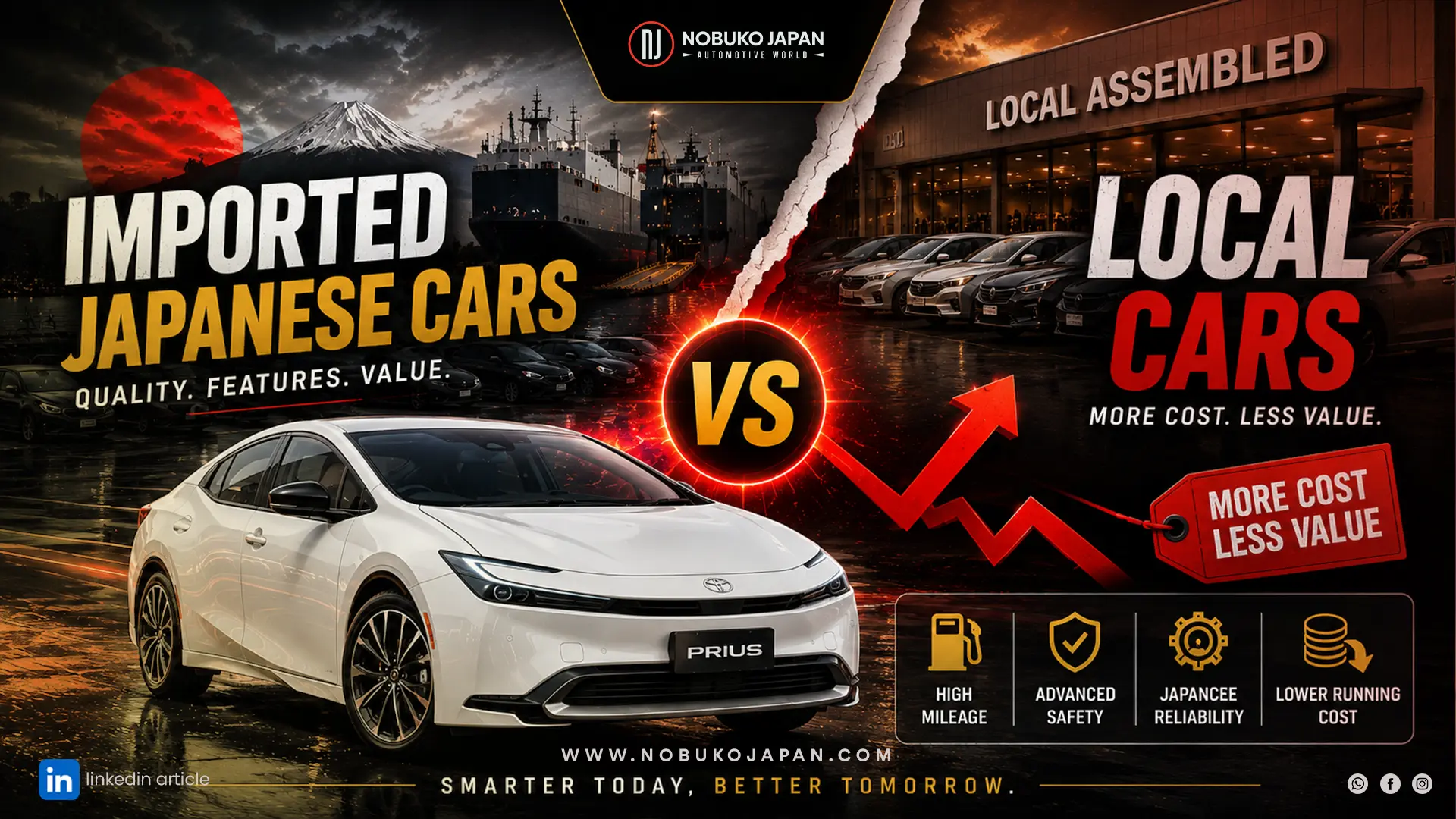
Nowadays, more and more people in Pakistan have started deciding whether they should buy Japanese imported vehicles or locally assembled ones. Picking the right one can actually be a little hard since both have their own benefits.
Japanese imported vehicles are considered to have the most advanced features, great fuel consumption, and quality construction. In turn, locally assembled vehicles tend to be easier to maintain, because spare parts and maintenance services can be found all over the country.
This guide is going to help you to make an informed decision by comparing these two types of vehicles in terms of cost, features, fuel consumption, maintenance, spare parts, resale value, and market updates of 2026.
There have been many changes in Pakistan's car market. A total of about 118,000 cars were sold in the first half of 2026. It was significantly higher compared to the same period in the previous year. Moreover, January 2026 recorded the highest car sales in the last four years.
There are changes in the market too. Toyota, Honda, and Suzuki continue to be the market leaders; however, their market share declined because now there are more car brands and imported cars to choose from.
Japanese imported cars are becoming more popular across Pakistan. The number of cars sold between December 2024 and December 2025 has about 20% imported used cars. As a matter of fact, this is actually a much higher number if compared to the previous years. It also shows that many people now prefer Japanese imports because they offer better quality, more features, and good value for money.
Imported cars in Pakistan are experiencing unprecedented demand. As per the State Bank of Pakistan, the value of CBU passenger cars imported in the month of January 2026 was $8.2 million, showing an incredible increase of 681.90% as compared to the previous year. In the first seven months of FY2025-26, there was an increase of 441% in the value of CBU imports, which increased from $47.9 million to $259.7 million.
Such tremendous growth reveals a fundamental change in consumer behavior. The Pakistani consumers are now unwilling to tolerate poor quality and inflated prices from the local assemblers. Instead, they are looking for Japanese cars in Pakistan that provide value for money.
In today’s context of increasing costs of petrol, fuel efficiency is one of the topmost priorities for Pakistani customers. Cars from Japan are more efficient than cars manufactured locally in Pakistan in terms of fuel efficiency.
Cars like the Toyota Aqua and Honda Fit Hybrid from Japan provide around 20–25 km/l, which is better than 10–15 km/l offered by traditional locally assembled cars. The Toyota Aqua provides around 24-30 km/l, whereas the Daihatsu Mira provides around 18-24 km/l, which are numbers beyond what locally assembled cars can offer. In addition to this, even the Japanese models of Alto ECO offer better fuel efficiency than the locally assembled versions. This vehicle delivers a mileage of 22-28 kilometers per liter in cities and 30-33 kilometers per liter on highways whereas the Suzuki Alto made in Pakistan provides 17-19 kilometers per liter in cities and 20-22 kilometers per liter on highways.
The better mileage results in considerable savings in a year that make up for any maintenance charges.
Japanese vehicles; even those 5 to 7 years old typically include features that remain absent or optional in locally manufactured cars:
These specifications are not just accessories, but they are the standard equipment in all the vehicles that are made in Japan for their domestic market. It is evident from the comparison of the locally made cars, where they have basic interiors and old technology.To see which specific Japanese models offer these features at the best auction prices, our best Japanese cars to import guide covers top models with full JDM specifications and typical landed costs.
Japanese manufacturers such as Toyota, Honda, Suzuki, and Daihatsu are famous all over the world because of their durability in the cars they manufacture. These companies take great care of quality control and make sure that the cars manufactured for their domestic markets are as good as those manufactured internationally.
The Japanese imports are always better than locally assembled automobiles in terms of quality of manufacture, cabin finishes, sound insulation, quality of interiors, safety features, and rustproofing. Locally assembled automobiles, although strong and functional, can never compete with these aspects.
In such an economic situation where inflation and depreciation in the value of rupee affect the middle class families, it becomes necessary to get best value for your money. A well-conditioned Japanese used car can be bought in Pakistan for anywhere between PKR 1.2 million to 2.5 million,For a model-by-model comparison of Toyota Raize and Yaris Hatchback — two of the most popular compact options for Pakistani buyers see our Toyota Raize vs Yaris Hatchback comparison for Pakistan. subject to certain specifications. It's significantly cheaper than many locally assembled new vehicles that offer fewer features at higher prices.
A real buyer's testimonial illustrates this value proposition clearly: "I bought a 2014 Vitz last year. It's better equipped and smoother than any new local car I could afford. It's my daily driver, and I've had zero issues so far".
One of the traditional concerns with Japanese imports has been parts availability and service expertise. However, this situation has transformed dramatically:
Spare parts for popular Japanese models are now widely available in major markets across Pakistan, including Bilal Gunj (Lahore), Shershah (Karachi), and Sultan Ka Khoo (Rawalpindi). Mechanics in the local market have mastered the skills specific to Japanese hybrid engines and CVT transmissions. The auction sheet authentication system has facilitated transparency, allowing buyers to trust the vehicle’s history and mileage.
Budget 2026-27 will be a revolutionary budget for imported vehicles. In the second phase of the Tariff Reform Plan, Prime Minister Shehbaz Sharif has approved drastic reductions in tariffs:
| Duty Component | Current Duty | Proposed Duty | Net Relief |
|---|---|---|---|
| Customs Duty (CD) | 100% | 50% | 50% |
| Regulatory Duty (RD) | 50% | 20% | 30% |
| Total Cumulative Tariff | 150% | 70% | 80% |
If implemented, this represents an 80-percentage-point cut in cumulative import taxes. In fact, this halves the tariff burden on imported vehicles. The market value of existing used imported cars in Pakistan could drop by 10% to 15% within 3-6 months as cheaper imports arrive.
Unexpectedly, however, the Federal Board of Revenue has introduced a further levy of 30% regulatory duty on used commercial vehicle imports from July 1, 2026, via SRO 1065(I)/2026. This further duty applies to the importation of commercially used vehicles falling within PCT Headings 8702, 8703, and 8704.
The additional 30% duty is charged over and above the existing regulatory duty, substantially increasing the overall tax burden on commercial imports of used vehicles. This policy will likely cut the price advantage enjoyed by imported used vehicles in the short term.
The policy environment is pulling the market in two opposite directions—imported vehicles could benefit from sweeping tariff reforms, while existing inventory may see temporary price increases due to regulatory duties. For those considering Japanese vehicles:
If you can wait: Proposed tariff cuts could make new Japanese cars in Pakistan significantly more affordable
If you need to buy now: You may face temporary price increases due to regulatory duties, but the long-term trend favors imported vehicles
Locally assembled vehicles continue to dominate in terms of unit sales. Suzuki remains the market leader with 50.8% share, followed by Toyota at 15.4% and Honda at 13.1%. The top-selling models include the Suzuki Alto, Toyota Corolla/Yaris/Corolla Cross, and Honda Civic/City.
Despite their market presence, locally assembled vehicles face valid criticism:
Industry experts note that despite reported high local content in several models, many vehicles remain uncompetitive internationally and fail to meet global safety and emission standards. This raises fundamental questions about whether local assembly provides genuine value to consumers or merely enriches protected manufacturers.
Regardless of whether you choose an imported or local vehicle, always:
The auto policy of Pakistan will soon expire in June 2026, and efforts have been initiated to prepare the Auto Industry Policy 2026-31. The new policy will be formulated in line with the National Tariff Policy where tariffs on finished vehicles will not exceed 15% and concessionary SROs will be removed from the market. This actually signals a shift towards a more market-driven automotive sector.
Pakistan’s automobile market is growing, and total sales will be around 297,000 units till June 30, 2026. The 2025-26 fiscal year will end with a total sale of 206,436 units, and that will represent a 39.4% increase. Market growth leaves space for the local assembling industry as well as importers.
Since Japanese car brands make up more than 90 percent of all vehicles produced in Pakistan, it is safe to say that they enjoy dominance in the new as well as used car category. Preference for Japanese used cars is not just a matter of choice; rather it is the most comfortable, safe, fuel-efficient, and valuable option available.
In conclusion, the above discussion has shown that Japanese imported cars should be preferred by Pakistani consumers in terms of value, features, and long-term satisfaction. While locally made cars provide ease of availability and low-cost maintenance, their efficiency, technology level, manufacturing quality, and performance can never compete with those of Japanese imports.
As policies undergo changes towards liberalization of the Pakistan automobile industry, the difference between Japanese automobiles and local assembly will only grow in favor of the former.
For the savvy Pakistani buyer in 2026, choosing a Japanese car isn't just a smart decision. In fact, it's an investment in quality, efficiency, and driving pleasure that will pay dividends for years to come.
Disclaimer: This guide is based on the latest available data from official sources including the Federal Board of Revenue, Pakistan Bureau of Statistics, State Bank of Pakistan, Pakistan Automotive
For Latest updates
The Pakistani car market is constantly changing. In fact, sedan cars have been dominating the roads ...
Toyota Yaris Sedan is one of the major vehicles in the Toyota portfolio across the globe. This provi...
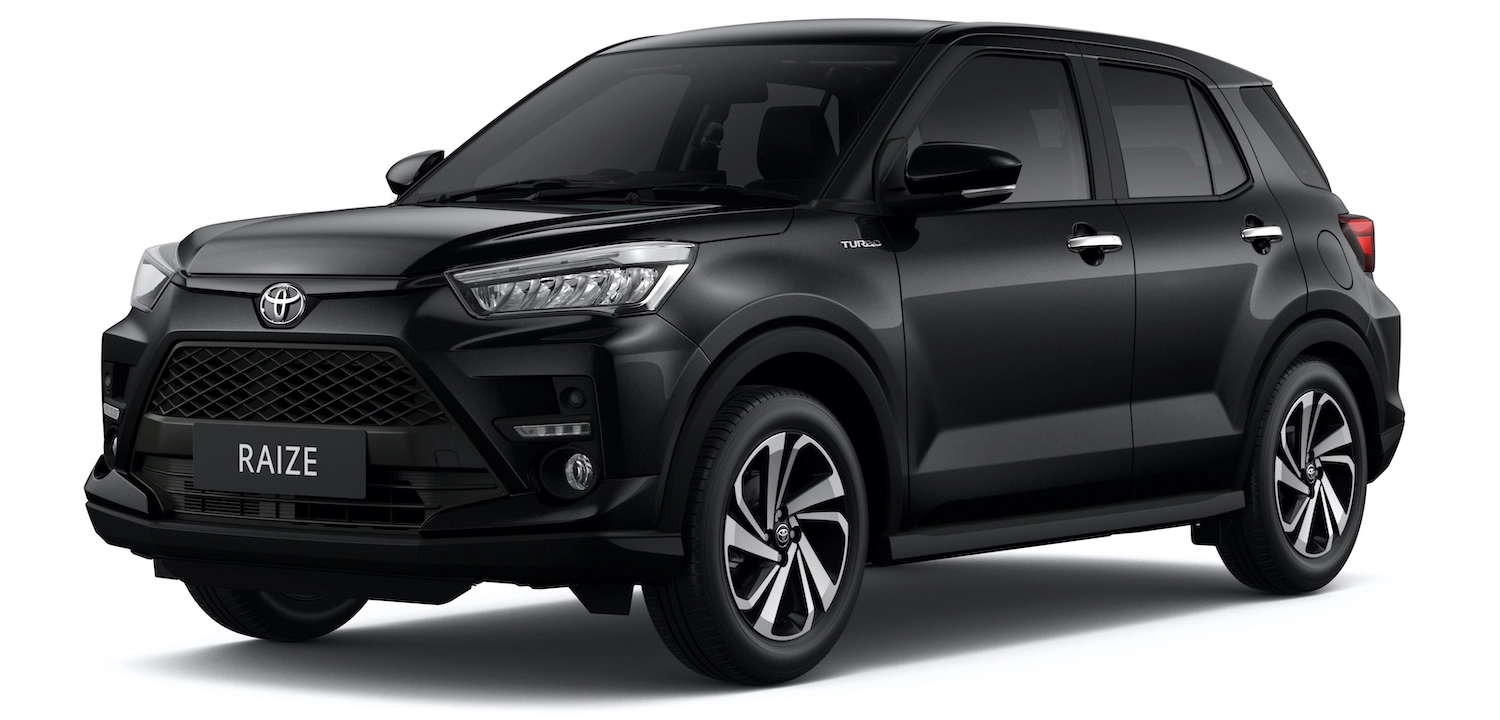
The Toyota Raize has gained popularity within the Pakistani roads since this mini-SUV resonates stro...
Considering the purchase of a new automobile in Pakistan? The traffic is heavy, the cost of gas is n...
Check out other articles related to Buying Guides.
Is the Toyota Raize the Perfect Small SUV for Pakistani Families?
