Almost every used car exported from Japan is first sold at a Japanese car auction. Japan has more than 120 auction venues, and roughly 140,000 vehicles pass through them each week (Kaiju JDM Imports). These auctions are open only to licensed members, so overseas buyers reach them through a Japanese used car supplier or auction agent.
Our Vehicle Sourcing Team has bid at Japanese auto auctions for 14 years. This guide explains the main auction houses, how they differ, and why it is worth knowing which ones your supplier uses.
the main Japanese car auction groups are USS, the largest by far; TAA, run by the Toyota Group; CAA, an independent group in central Japan; JU, run by local used car dealer associations; and HAA Kobe. A good supplier can bid across several of them, which gives you more choice and better prices.
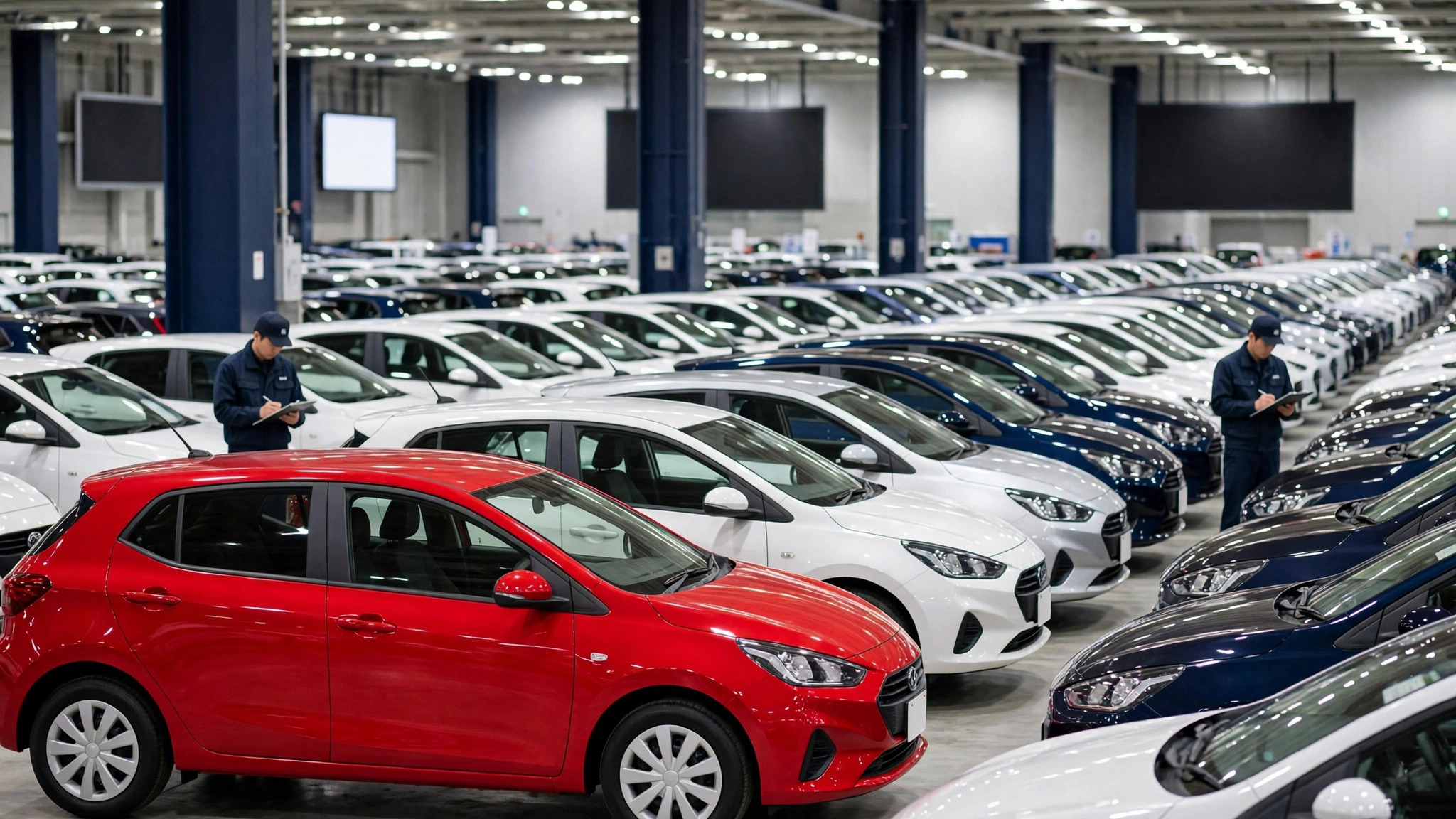
Auctions run weekly at each venue. Before a sale, every car is checked by the auction's own inspectors, who record its grade, mileage and damage on an auction sheet. Members bid in person, or remotely through online systems, often across several venues at once. Our step-by-step auction guide explains the process from your side.
USS is Japan's largest auction operator, with 19 venues from Hokkaido to Kyushu and around 40% of the market. In FY2023, USS listed 3.08 million vehicles and sold 1.98 million (Darial). USS Tokyo, held on Thursdays, is the single largest auction in Japan. Members can also bid at all 19 USS venues, plus six affiliated sites, from a remote terminal. For most buyers, USS offers the widest choice of makes, models and price ranges.
TAA is the Toyota Group's auction network, with 11 venues (Provide Cars). Its stock leans toward Toyota, Lexus and Daihatsu, often traded in through Toyota dealers. It is a strong source for Toyota hybrids, MPVs such as the Alphard, and Lexus models.
CAA is an independent operator with four venues in central and eastern Japan, including its main Chubu venue in Aichi Prefecture. It shares an online bidding portal with TAA, so suppliers can view both networks together. CAA carries a broad mix of independent dealer stock.
JU auctions are run by regional branches of the Japan Used Car Dealers Association, with around 66 venues nationwide and more than a million transactions a year (Darial). Each venue reflects its local market, which can make JU a good place to find everyday cars at competitive prices.
HAA Kobe is a large independent auction in western Japan. Beyond the major groups, there are specialist and regional auctions, including manufacturer-linked and commercial vehicle sales. Many suppliers also use online platforms that combine listings from several auction houses in one place.
| Auction group | Venues | Known for |
| USS | 19 | Largest volume and widest variety |
| TAA | 11 | Toyota, Lexus and Daihatsu stock |
| CAA | 4 | Independent stock in central Japan |
| JU | About 66 | Regional dealer stock, everyday cars |
| HAA Kobe | 1 main venue | Large independent auction in western Japan |
Yes, in three ways.
Choice. A supplier with access to only one or two venues sees a fraction of the market. Access to several groups means more cars to choose from and less chance of overpaying for the only suitable car that week.
Grading. Every auction uses its own inspectors. Grading systems are broadly similar, but a grade 4 at one house is not guaranteed to match a grade 4 at another. Always read the full auction sheet and damage map, not just the grade. Our auction sheet guide explains how, and our free auction sheet translator helps you read one yourself.
Stock type. Manufacturer-linked auctions such as TAA tend to carry more of their own brands, while USS and JU carry a broader mix. If you want a specific Toyota or Lexus, TAA is worth watching alongside the USS.
Most Japanese companies end their financial year on 31 March, so many dealers and leasing companies clear stock in March and April. That makes spring the busiest time at auction, with the widest choice. January, August and December are usually quieter, with fewer cars listed (KRA Network). More choice doesn't always mean lower prices, since overseas demand peaks too, but it does improve your chance of finding exactly the right car.
For a wider checklist, read how to choose a reliable Japanese car supplier. To understand whether auction or ready stock suits you better, see auction agent vs exporter vs stock dealer.
USS is the largest auction group, with 19 venues and around 40% of the market. USS Tokyo is the single largest auction venue.
Not directly. Japanese auctions are open only to licensed members, so overseas buyers bid through a Japanese used car supplier or auction agent.
Broadly similar, but not identical. Each auction uses its own inspectors, so always read the full auction sheet and damage map.
March and April usually have the most cars listed, because many Japanese companies clear stock before the financial year ends on 31 March.
Follow live listings on our Japanese car auctions page, browse ready-to-ship Japanese used cars for sale, or request a specific car and we'll watch the auctions for you. For questions, contact us through our contact page.
Nobuko Japan Vehicle Sourcing Team
Our sourcing team has 14 years of experience in Japanese used vehicles, auction bidding and vehicle sourcing. The team bids at Japanese auctions every week and supplies dealers and private buyers in the UK, Ireland, Cyprus, Pakistan and the USA. This guide reflects how we choose where to bid for our customers.
Last reviewed: November 2026.
For Latest updates
Importing a car from Japanese car auctions UK is a smart move, but only if you can read the car auct...

1. The Rise of Japanese Kei cars Auto AuctionsKei cars rule Japanese auctions because they're the ul...

Looking to buy cars from Japanese auction platforms? You’re making a smart choice. Japanese car au...

Looking to buy cheap cars from Japan? Japanese auto auctions offer incredible deals, but the true Ja...
Check out other articles related to Auction insight.
Is Buying from Japanese Car Auctions Cheaper? Real Japanese Auction Car Prices Breakdown

